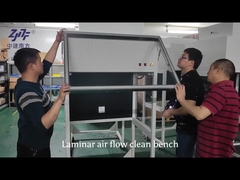
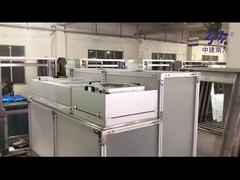
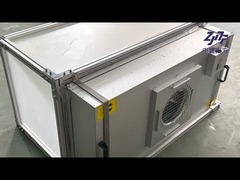
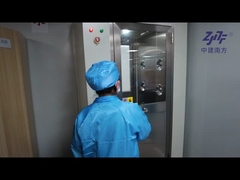
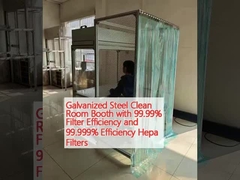
Brief: From concept to demonstration, this video highlights the evolution and practical outcomes of the Cleanroom Super Clean Bench. You will see a detailed walkthrough of its stainless steel construction, air purification process, and how it creates an ISO Class 5 environment for sensitive operations in biopharmaceuticals and electronics manufacturing.
Related Product Features:
Provides a localized ISO Class 5 (Class 100) clean environment through HEPA filtration with ≥99.97% efficiency for particles ≥0.3μm.
Features a durable stainless steel construction with options for vertical or horizontal laminar airflow to suit different application needs.
Includes integrated UV lamps for surface sterilization and a differential pressure monitoring system for operational safety.
Designed for versatile applications including biopharmaceutical aseptic preparation, electronics assembly, and scientific research.
Offers flexible configurations such as single or double-sided operation and mobile or integrated production line setups.
Equipped with adjustable mean wind speed from 0.3 to 0.6 m/s and maintains low noise levels of ≤58dB.
Features a comprehensive maintenance protocol including pre-filter cleaning and HEPA filter replacement monitoring.
Provides a well-lit workspace with illuminance ≥300LX and minimal vibration of ≤3μm in all directions.
Las preguntas:
What is the primary function of a Cleanroom Super Clean Bench?
The primary function is to provide a high-cleanliness, localized ISO Class 5 environment by generating a stable, laminar flow of purified air to protect samples and processes from contamination during sensitive operations.
What is the difference between vertical and horizontal laminar flow configurations?
Vertical laminar flow directs air downward from the top, ideal for pharmaceutical or biological applications requiring operator protection. Horizontal laminar flow moves air parallel from front to back, offering lower noise levels and is commonly used for electronics assembly or precision instrument handling.
How is this laminar flow cabinet different from a biosafety cabinet?
A laminar flow cabinet operates under positive pressure, protecting only the samples from contamination. A biosafety cabinet uses negative pressure to safeguard the operator, samples, and environment, and is mandatory when handling biohazardous materials.
What maintenance is required for the Cleanroom Super Clean Bench?
Regular maintenance includes sterilizing surfaces with UV light before use, pre-running the fan, cleaning pre-filters regularly, monitoring HEPA filter pressure drop, and wiping surfaces with 70% ethanol or phenol solution. The HEPA filter should be replaced when airflow velocity drops below 0.3 m/s.